
Last updated November 15, 2026
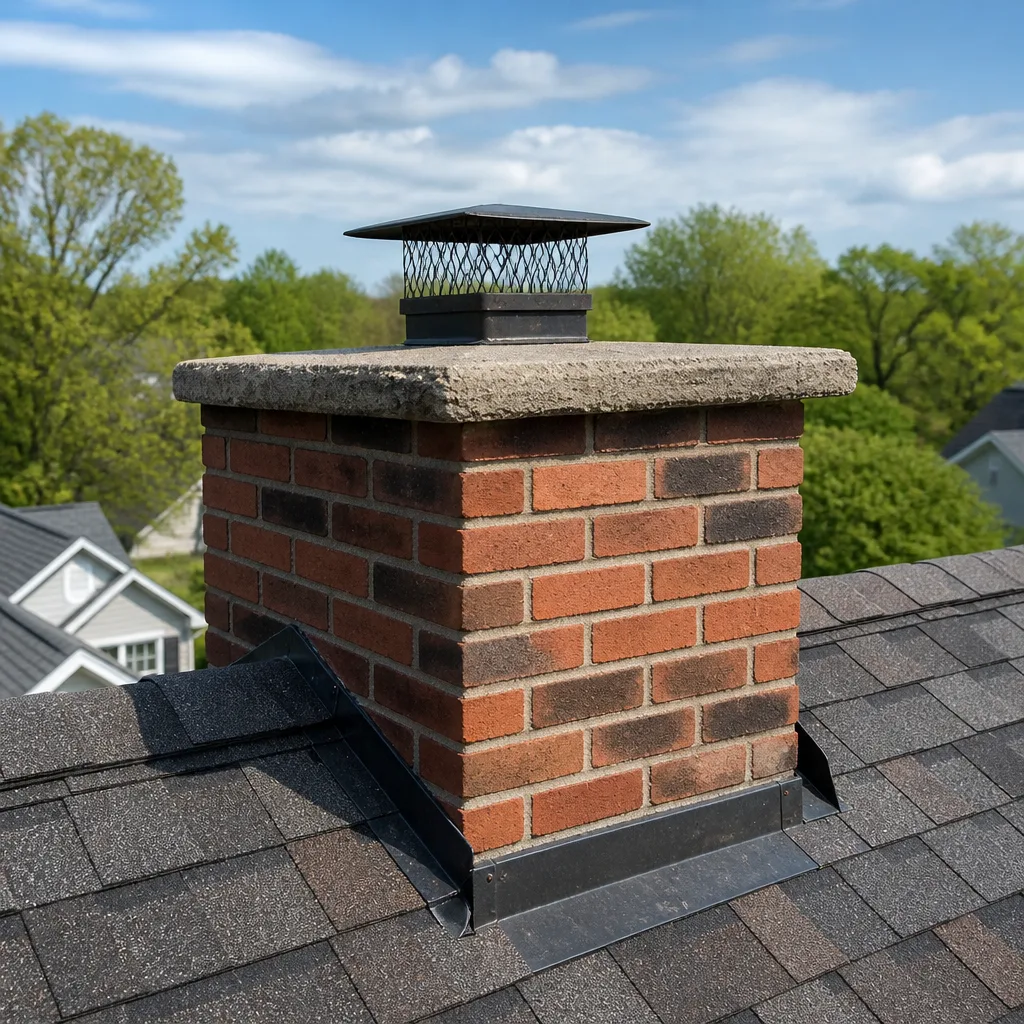 Sweep & inspection
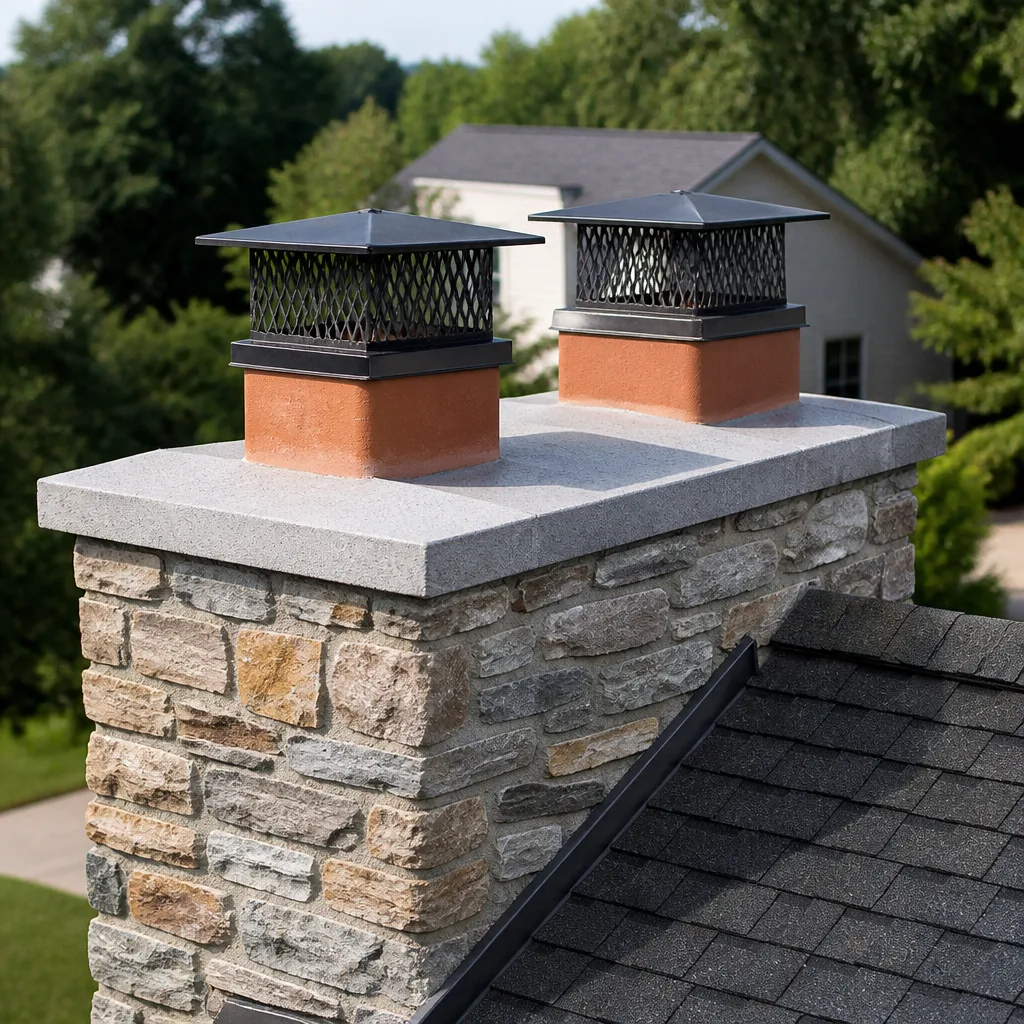 Caps & crowns
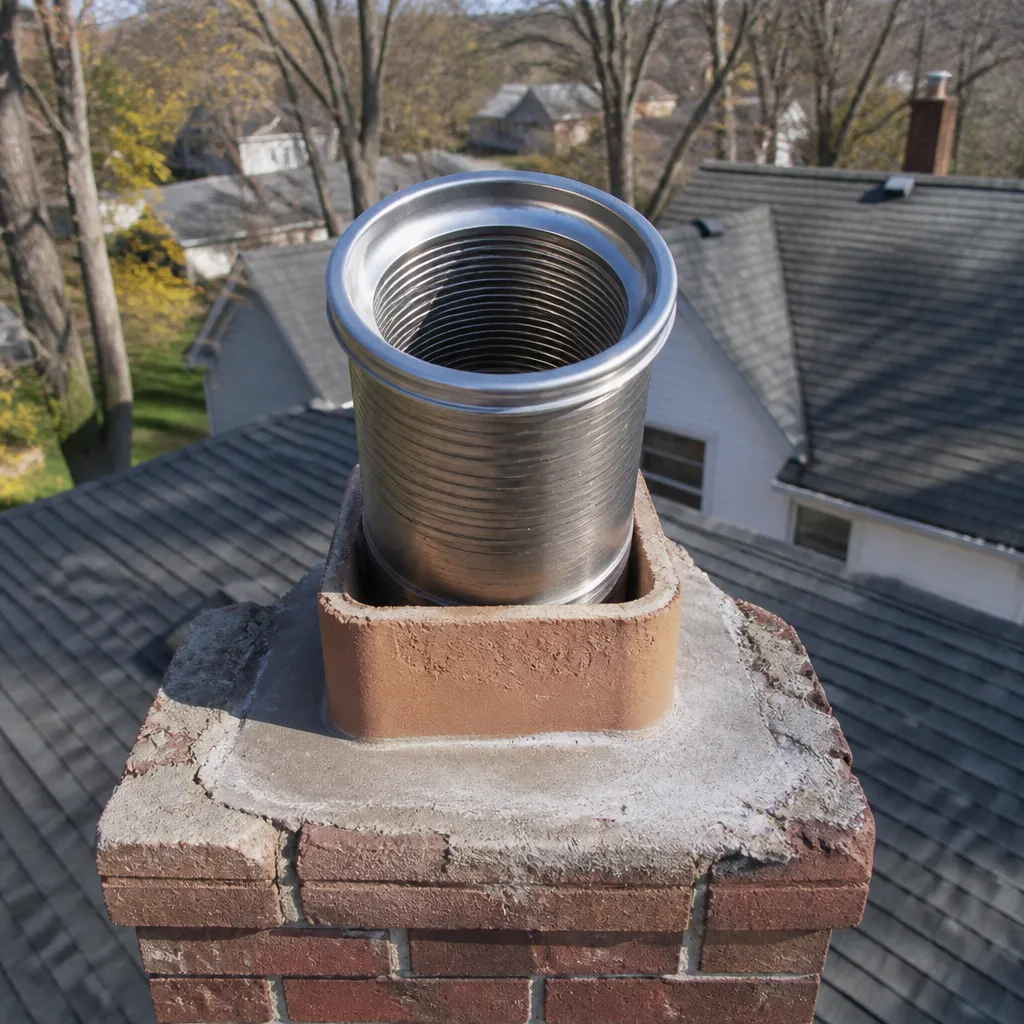 Flue relining
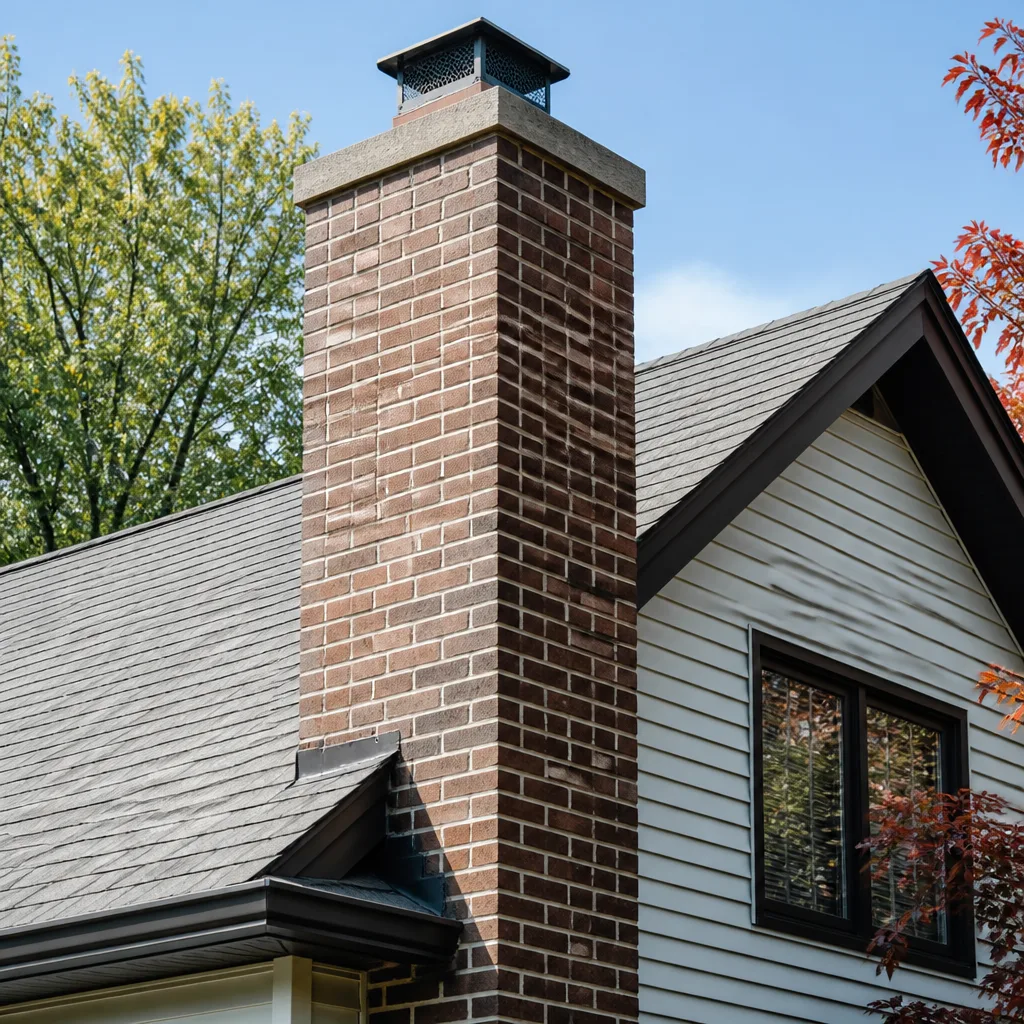 Masonry repair
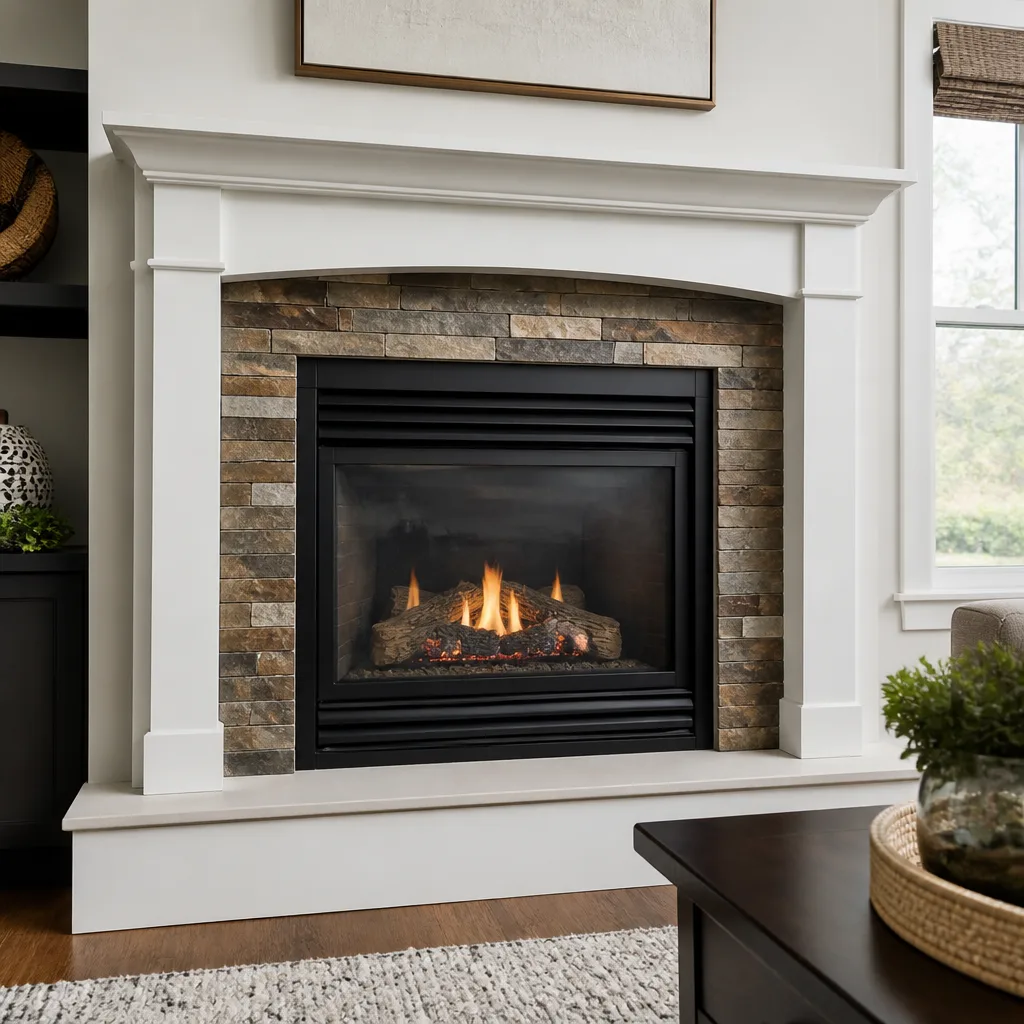 Gas fireplace service
Level 1 sweep and inspection to the NFPA 211 annual standard - flue, crown, cap, and flashing checked and photographed
Chimney sweep logs do not sweep chimneys. They loosen some creosote - which then falls where a brush and vacuum still have to collect it.
DIY vs Professional Chimney Cleaning: The Spokane Valley Homeowner’s Decision Guide
The brush kit works fine. That’s the part most guides won’t tell you. A homeowner with a properly sized poly brush, a set of rods, and a free afternoon can knock loose soot off a flue box, and the chimney will look better when they’re done. The problem is what comes next. Creosote staging, glazed deposits, hairline liner cracks, and a deteriorated smoke chamber don’t announce themselves. A DIY sweep can leave a system looking cleaner from the firebox while missing the condition that actually decides whether it’s safe to burn again. Cleaning and inspection are separate skills, and professionals train for them separately. This guide is written for the homeowner in Spokane Valley who wants an honest capability check before deciding which way to go.
Quick Answer
A DIY brush sweep can remove light, dry soot from an accessible flue, but it cannot reliably diagnose creosote stage, liner condition, or smoke chamber integrity, and it usually worsens indoor air quality because a shop vacuum isn’t a HEPA unit. In Spokane Valley’s older housing stock, where liner history is often unknown and wood stoves have been added to masonry fireplaces, the diagnostic gap is the real risk. A professional sweep pairs the cleaning with a written condition report, and that’s what decides whether you can safely burn this season.
Styles & brands we work with
- Sweep & inspection
- Caps & crowns
- Flue relining
- Masonry repair
- Gas fireplace service
Table of Contents
- What a DIY Brush Sweep Actually Accomplishes
- The Equipment Gap: HEPA Vacuums and Indoor Air
- Spokane Valley Risk Factors That Raise the Stakes
- Creosote: The Three Stages You Need to Recognize
- What a Professional Inspection Delivers That a DIY Clean Cannot
- When DIY Is a Reasonable Call
- Cost Comparison: DIY vs Professional
- How Often Should a Chimney Be Swept?
What a DIY Brush Sweep Actually Accomplishes
A DIY sweep removes surface soot from the flue walls. That’s a real service, and it’s the same mechanical action a professional performs with a rod-and-brush setup. On a lightly used chimney burning dry, well-seasoned wood, a homeowner with the right brush diameter and a soft touch can reduce the soot load meaningfully. The flue will draft a little better, the firebox will smell less between burns, and you’ll see fewer soot flakes drifting into the room.
Here’s what the brush does not do. It doesn’t tell you how thick the remaining creosote is, whether the deposit has staged into something glazed and flammable, whether the flue tiles above the smoke shelf have spalled, or whether the mortar joints between tiles are still intact. A brush passes through all of those conditions with the same tactile resistance. The chimney doesn’t signal you.
What a DIY sweep reliably leaves you with:
- Cleaner flue walls on the lower accessible reach of the chimney.
- No information about creosote stage or thickness.
- No documentation of liner, smoke chamber, or crown condition.
- No venting assessment for a gas or oil appliance sharing the system.
- No liability. If a hidden crack goes unnoticed, the outcome is on you.
Professional chimney sweeping in Spokane Valley pairs the brush work with a camera-assisted look at the whole system. That’s the difference between cleaning and diagnosing, and it’s the distinction that matters most on older houses.
The Equipment Gap: HEPA Vacuums and Indoor Air
This is the piece most DIY guides skip. A shop vacuum isn’t built for chimney work. It filters coarse debris, not the fine soot and creosote dust that a flue brush dislodges, and it lacks the airflow volume to hold negative pressure inside the firebox while the brush works. The result, in practice, is that soot escapes back into the living room. It lands on furniture, in the carpet pile, and in the HVAC return. It smells for weeks.
Professional chimney sweeps run industrial HEPA vacuums sized to the firebox opening, plumbed into the flue before the brush goes in. They stage drop cloths, seal the firebox opening, and run the vacuum continuously so the chimney is under negative pressure the whole time. Filtration goes down to fine particulate, not just visible dust.
If you’re going to sweep your own chimney anyway, at minimum you need:
- A true HEPA vacuum rated for fine particulate.
- Poly brushes matched to the flue’s exact interior dimensions.
- A firebox seal or negative-pressure setup.
- Drop cloths and a plan for the soot that falls.
- Respiratory protection rated for fine particulate.
Few homeowners own any of that, and the equipment cost to acquire it usually exceeds the price of a professional sweep. That math is worth doing before the brush comes out.
Spokane Valley Risk Factors That Raise the Stakes
General DIY chimney advice is fine for newer construction with clear documentation. Spokane Valley’s housing stock is not always that. Different neighborhoods here have different vintages, and the older homes often come with a chimney history that’s been lost between owners. When that history is unknown, a professional assessment before the burn season is the safer call.
The specific local conditions that tilt toward professional inspection:
- Unknown liner history. Lots of Spokane Valley homes have been through two or three owners, sometimes more. The clay tiles may have been replaced, relined, or repaired and there’s no paper trail. The only way to know what you’re burning into is a camera look.
- Wood stoves added to masonry fireplaces. This is a common pattern here. A wood stove inserted into an existing fireplace is a legitimate setup when it’s connected with a proper liner, but plenty of installs skip that step. A stove drafting into an unlined or partly failed flue behaves differently on the coldest nights of the year, and that’s when the problems show up.
- Previous owners’ burning habits. Unseasoned wood, trash fires, extended low-burn cycles, and occasionally the burning of treated lumber all leave different creosote signatures. You can’t unwind that from the firebox.
- Cold-season demand. Spokane Valley burns wood hard in winter. Long heating seasons produce more creosote per cord than mild climates, which means the inspection cadence should keep pace with actual use rather than a fixed calendar.
- Volatile spring temperature swings. Repeated freeze-thaw cycles stress masonry crowns and mortar joints. Hairline cracks that look cosmetic in July can open up further by the following March.
The pattern here is consistent: in Spokane Valley, the case for a professional sweep isn’t about the cleaning. It’s about knowing what you have.
Creosote: The Three Stages You Need to Recognize
Creosote stages look completely different to a trained eye and identical to an untrained one. That’s the crux of the DIY question. A homeowner can see that the flue looks dirty. Recognizing whether the deposit is stage one, two, or three requires specific familiarity with how each stage behaves, and the treatment path changes at each level.
Stage 1: Sooty flakes and light dust
The most benign form. This is what a brush handles well. Deposits are dry, flaky, and light, and a standard poly brush clears them. Stage 1 creosote doesn’t threaten the flue with fire, though it should still be kept off enough to keep draft consistent.
Stage 2: Hard, crusted, and glazed in places
Stage 2 deposits have bonded to the flue surface. They’re hard, sometimes shiny, and they don’t brush off cleanly. They come off in chunks with rotary equipment or chemical treatment. This is the stage where a brush alone stops being effective, and where a homeowner often thinks the sweep “worked” because visible buildup is reduced while a band of bonded crust remains higher in the flue.
Stage 3: Glazed and combustible
Stage 3 creosote is the flammable one. It looks like a shellac or glaze on the flue wall, and it ignites at temperatures that a normal fire can reach. This is the deposit that drives chimney fires. It cannot be swept off with a hand brush. It requires rotary tools, chemical treatment, and often professional intervention to remove safely. A licensed professional needs to see this stage to assess it, because it sits high in the flue where a homeowner can’t reach with a hand tool.
In our experience across Spokane Valley, stage 2 is more common than homeowners expect on wood-burning systems used through a full winter season. Recognizing it matters because it changes both the treatment and the timing of the next sweep.
What a Professional Inspection Delivers That a DIY Clean Cannot
A professional inspection produces something a DIY sweep never can: documentation. That’s the deliverable. Written condition reports, camera photos, notes on the crown and cap, and a professional liability on the assessment itself. When a chimney sweep puts a report in writing, that report means something if the system later fails.
Specifically, a professional inspection delivers:
- A camera walk of the flue. Interior video at the top, middle, and bottom of the flue, showing liner integrity, mortar joints, and any offset or obstruction.
- Flue sizing check. A comparison of the flue’s interior dimensions against the appliance it serves. A wood stove drafting into an oversized masonry flue doesn’t vent correctly, and the report documents it.
- Smoke chamber and damper assessment. The smoke chamber is the sloped area above the damper and below the flue. It collects creosote that brushing alone doesn’t clear and it’s a common weak point in older masonry.
- Exterior and crown condition. The chimney top, mortar, crown, and cap all matter for water intrusion. What water gets in, freeze-thaw expands, and the damage compounds through winter.
- A written recommendation with evidence. The sweep should give you the photos and the reasoning behind any recommendation. If the recommendation is “you need a liner,” you should see the reason.
This is where a single company with all three services under one roof matters. Bellmont Chimney Sweep performs the sweep, inspection, and repair work with the same team, using products such as Olympia Chimney, Famco, Copperfield, and DuraFlex on the repair side. Nothing gets handed off between vendors when the recommendation turns into a piece of work. For a broader look at what that involves, see our pages on chimney sweep and chimney repair.
One important safety note before we leave this section. If your inspection reveals a creosote-glazed flue, do not attempt to burn hot to “clean it out yourself.” That’s a common recommendation online and it’s dangerous. Stage 3 creosote ignites. The right move is a trained professional with rotary and chemical equipment, and the work should be done before the next fire is lit.
When DIY Is a Reasonable Call
Not every chimney needs a professional sweep every season. That’s honest, and we’d rather say so than pretend otherwise. There are legitimate scenarios where a homeowner with the right equipment, an inspection history, and honest record-keeping can brush a light load without a professional visit.
DIY is a reasonable call when all of these are true:
- The chimney has had a professional inspection within roughly the last year or two, and the report is on file.
- The appliance is a gas insert or gas fireplace with light deposits and no evidence of liner damage on the last report.
- The system has been in steady use with well-seasoned wood, or gas-fired exclusively, and you know the burn history.
- Buildup is visible but light, with no glazing or hard crusting visible above the smoke shelf.
- You own a genuine HEPA vacuum and can set up negative pressure at the firebox.
- You can safely inspect the chimney crown, cap, and exterior from the ground with binoculars.
A lightly used gas fireplace with a recent inspection history is the clearest case. The deposits are minimal, the flue doesn’t see creosote in the same way a wood-burning system does, and the inspection history documents the liner’s condition. In that case, annual brushing is fine, and a professional sweep every few years supports the record alongside an inspection.
Every criterion has to be satisfied. If any one is missing, particularly the inspection history or the HEPA equipment, the professional option is the honest one.
Cost Comparison: DIY vs Professional
The comparison isn’t really cost vs cost. It’s cost vs cost plus risk. A DIY sweep appears cheaper because the effort doesn’t carry an invoice. The equation changes once you add the equipment a chimney sweep actually requires and the diagnostic value of the inspection that a DIY clean skips.
A fair line-item comparison for a Spokane Valley homeowner:
| Item | DIY | Professional |
|---|---|---|
| Poly brush set and rods | Required purchase | Included in service |
| HEPA vacuum rated for fine soot | Required purchase | Included in service |
| Respiratory protection and drop cloths | Required purchase | Included in service |
| Cleaning | Yes | Yes |
| Creosote stage assessment | Not possible | Yes |
| Camera inspection of flue interior | Not possible | Yes |
| Written condition report | None | Provided |
| Liability if a defect is missed | On the homeowner | On the professional |
| Follow-through if repair is needed | Second contractor required | Same team |
The pattern here is clear. If a homeowner already owns a HEPA unit and brushes a lightly used gas fireplace with a recent inspection on file, the DIY cost is genuinely lower. If any of those conditions aren’t met, the “savings” from DIY come at the price of not knowing what’s inside the flue. In our experience, that’s not a trade most homeowners should make, especially in Spokane Valley where older homes often arrive with unknown liner history.
The honest answer for most homeowners in Spokane Valley is that a professional sweep plus inspection is the lower total cost once the diagnostic value is weighted in. Reach out to the team through Bellmont Chimney Sweep for an exact estimate.
How Often Should a Chimney Be Swept?
Once per year is the standard answer for a wood-burning chimney, and it’s the right baseline for most Spokane Valley homes that burn wood through the season. Gas-fired appliances run a lighter schedule, and an inspection is more valuable than a sweep on those systems. The variable that matters most is how much wood you actually burn, not the calendar.
Use this decision guide:
- Wood-burning fireplace or stove, regular winter use: sweep annually. Inspect at the same time.
- Wood-burning with heavy winter use: sweep annually, and if a professional reports stage 2 or stage 3 deposits at that sweep, sweep again mid-season.
- Gas insert or gas fireplace: inspect annually; sweep as the inspection recommends. The deposits accumulate far more slowly than wood systems.
- Any system with a new appliance, a moved appliance, or an unrecorded install: inspect before first use, regardless of the calendar.
- Any prior chimney fire, even a small one: inspect before the next fire is lit.
Between sweeps, the more useful habit is a visual check. Look for soot falling into the firebox, a smoky smell that won’t clear, or draft that behaves differently than it used to. Any of those warrant an inspection rather than another burn.
Common Mistakes to Avoid
- Burning hot to “burn off” creosote. This is the most dangerous piece of DIY chimney advice online. Stage 3 creosote ignites at temperatures a normal fire can hit. The right move is professional removal, not a hotter fire.
- Using a shop vac as a chimney sweep vacuum. A shop vac filters coarse debris. It cannot hold negative pressure and it doesn’t capture fine soot. Soot will escape into the living room and the smell will linger for weeks.
- Assuming a clean firebox means a clean flue. The flue is above the smoke shelf, and creosote that stages there is invisible from where you’re standing. Cleaning below doesn’t prove anything about the flue above.
- Skipping the inspection because the sweep “looked clean.” A sweep is cleaning. An inspection is a documented assessment. They are different services. On an older Spokane Valley home with unknown liner history, only the inspection tells you what you have.
- Brushing a clay tile flue with a metal brush. Metal brushes abrade the tile surface and accelerate spalling. Poly brushes are the right tool for clay tile flues, and using the wrong tool causes damage a professional sweep would have avoided.
- Burning unseasoned wood to keep the burn going through winter. Wet wood produces more creosote per cord than dry wood, and it stacks up in stages that catch homeowners off guard by February. Wood with real seasoning time does the opposite.
- Adding a wood stove to an unlined masonry fireplace without a liner. This is a frequent pattern in older Spokane Valley homes. It works only when the stove is drafting into a properly sized and intact liner. If the liner is missing or damaged, the setup needs professional attention before the next fire.
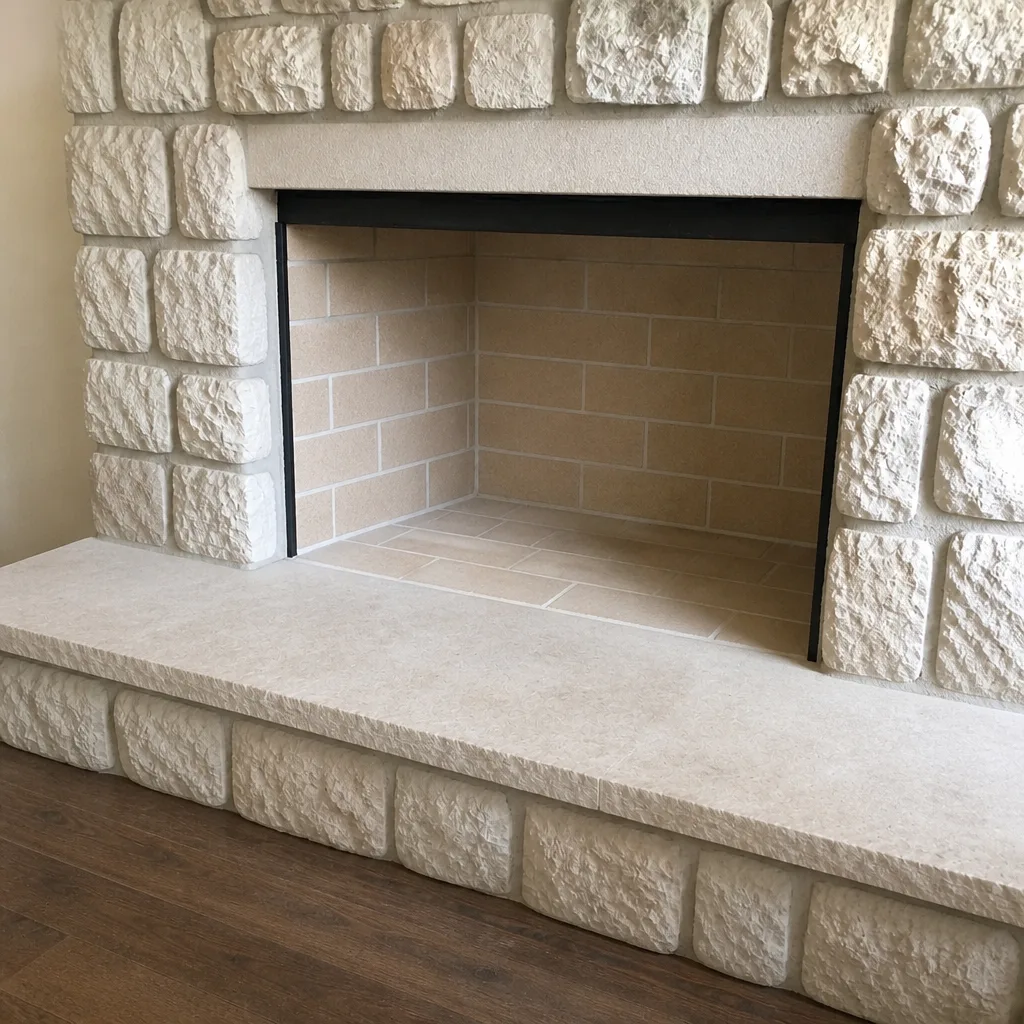
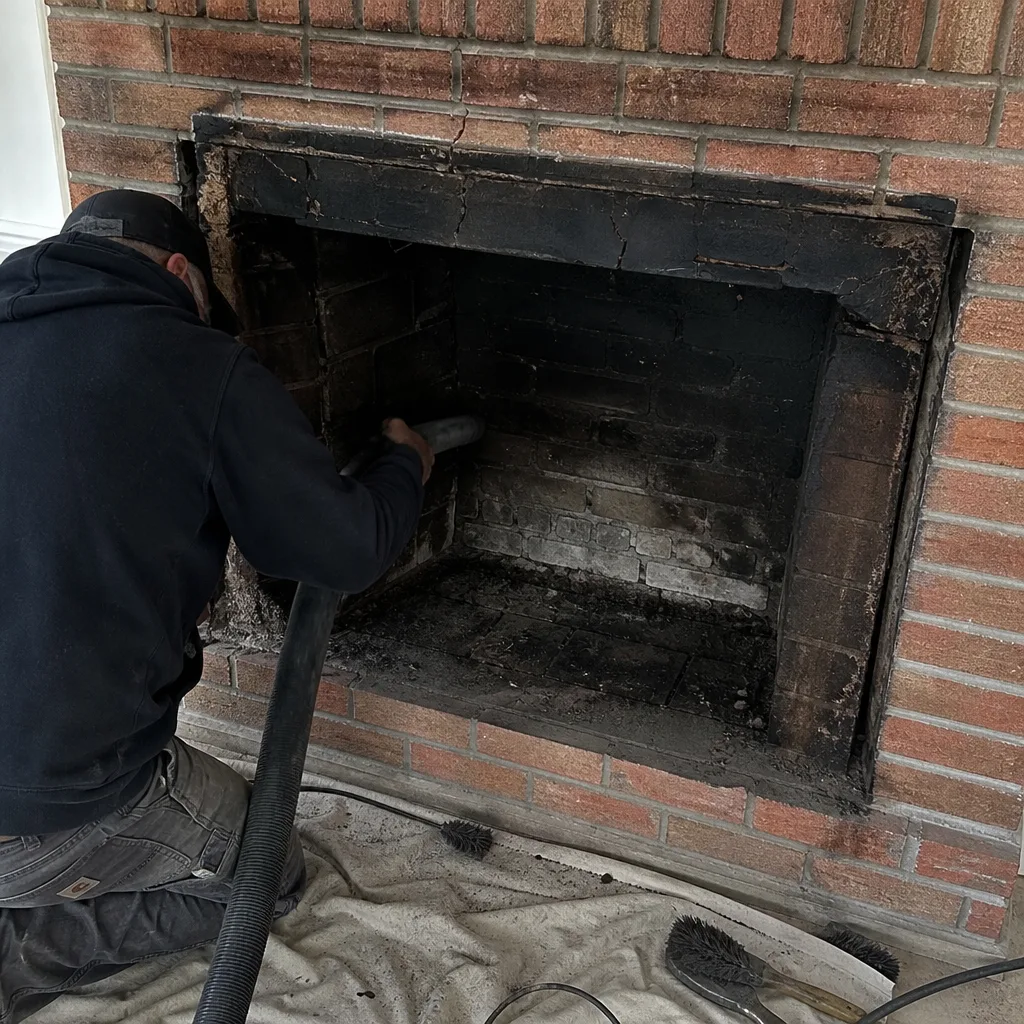
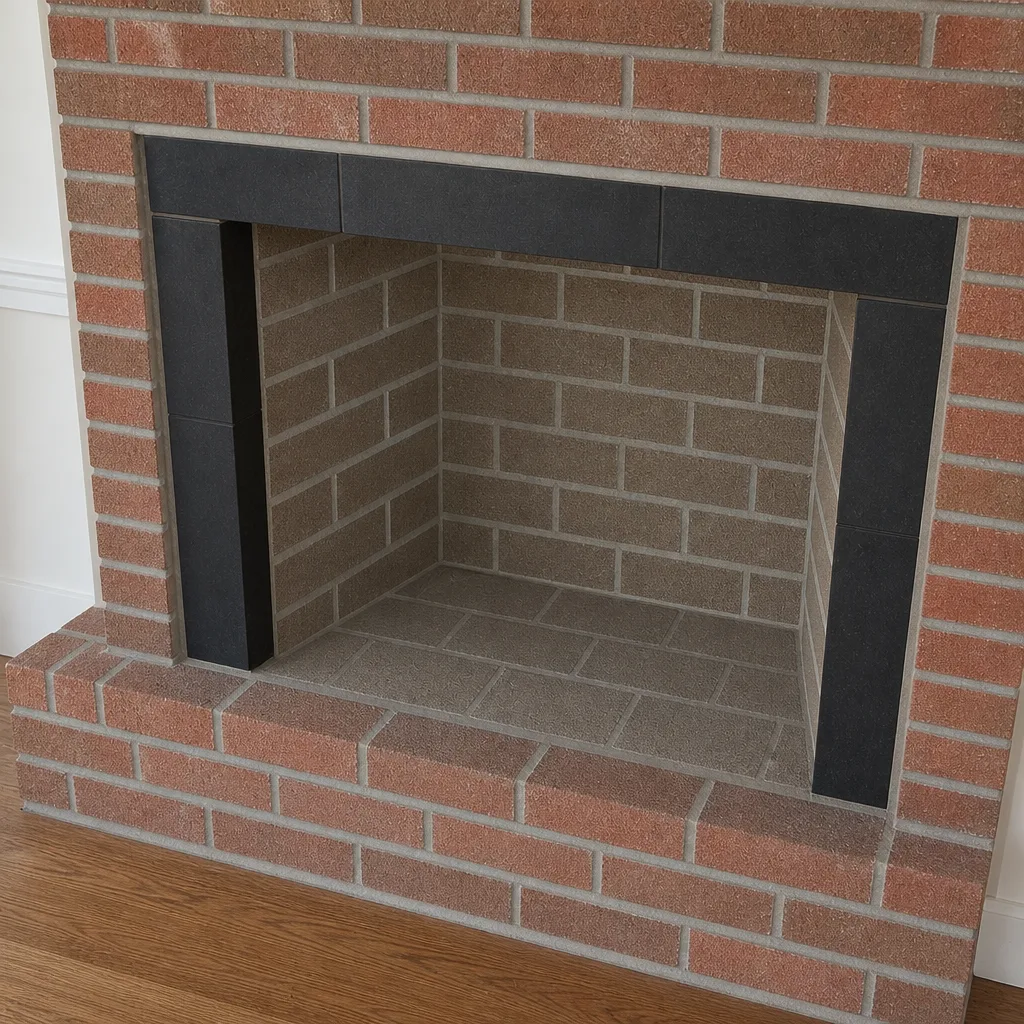
See the difference
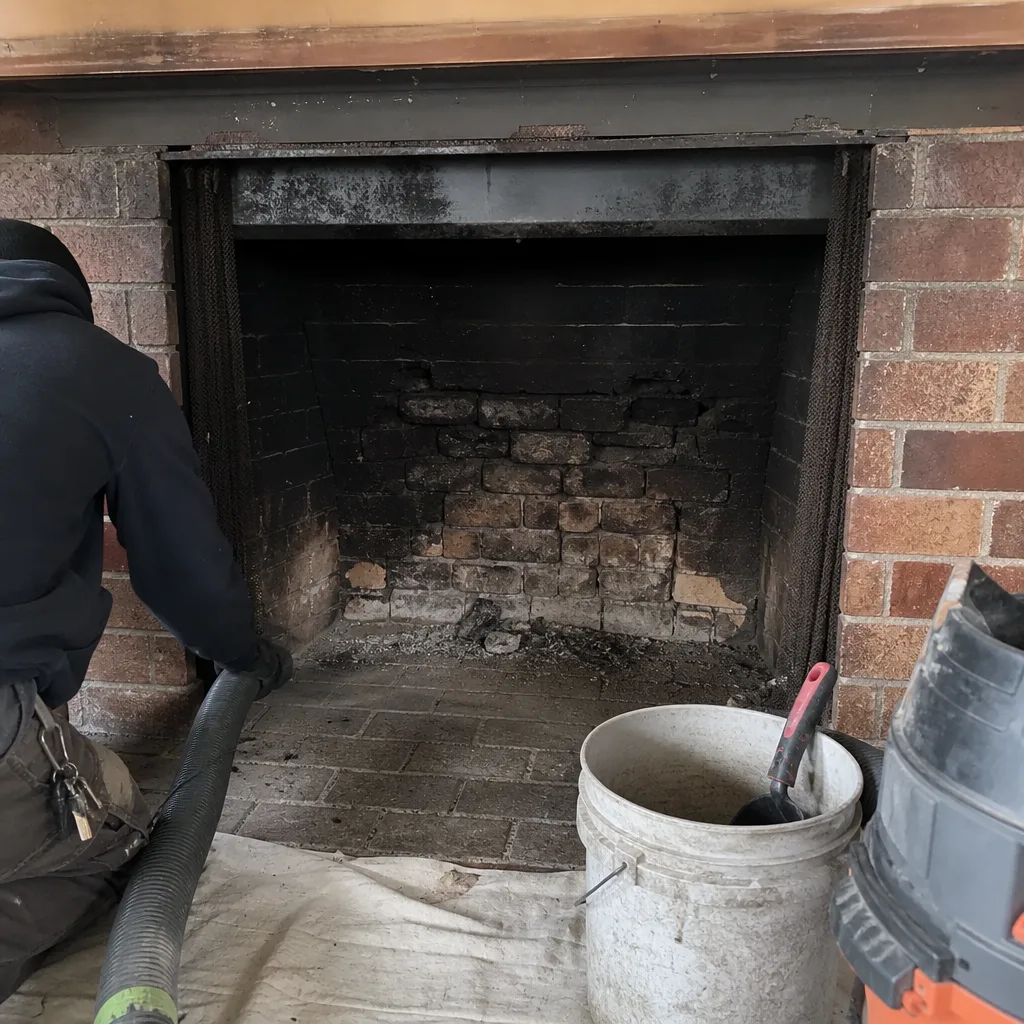 Before
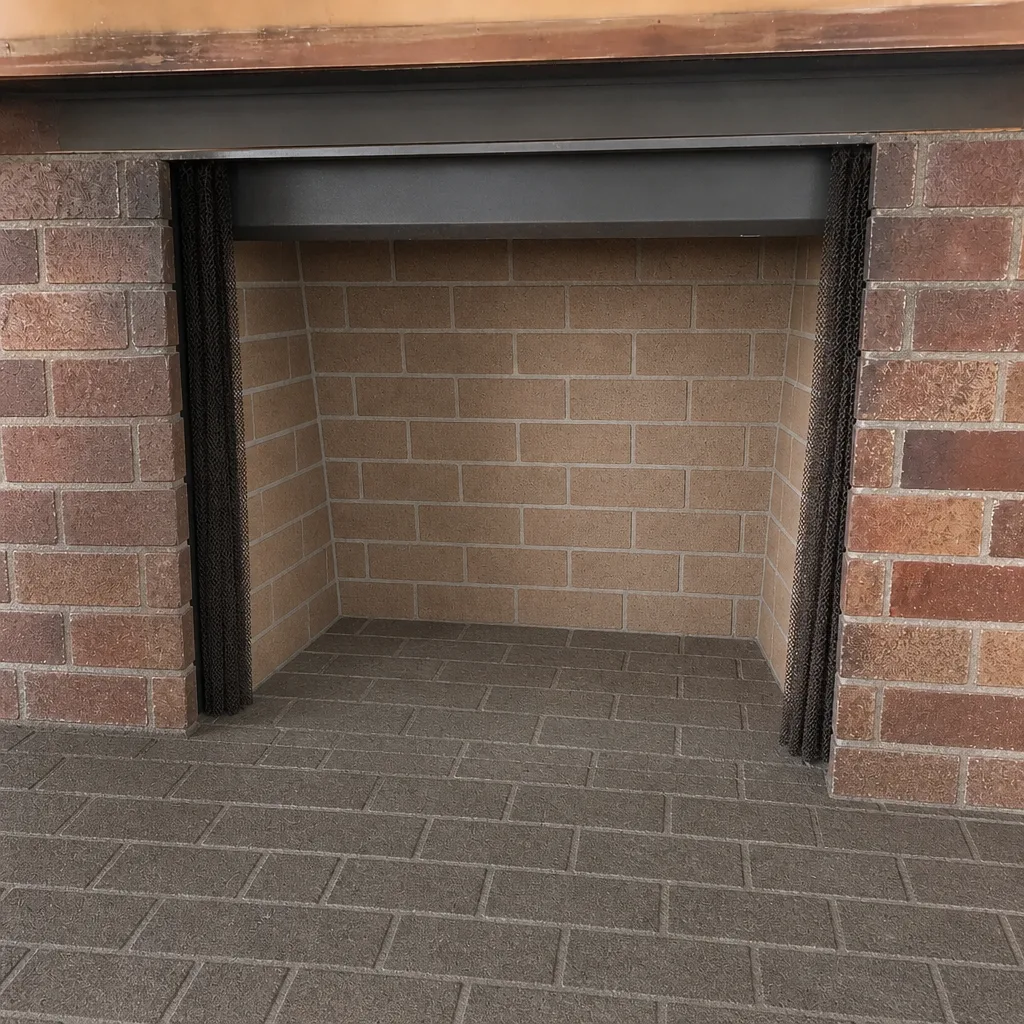 After
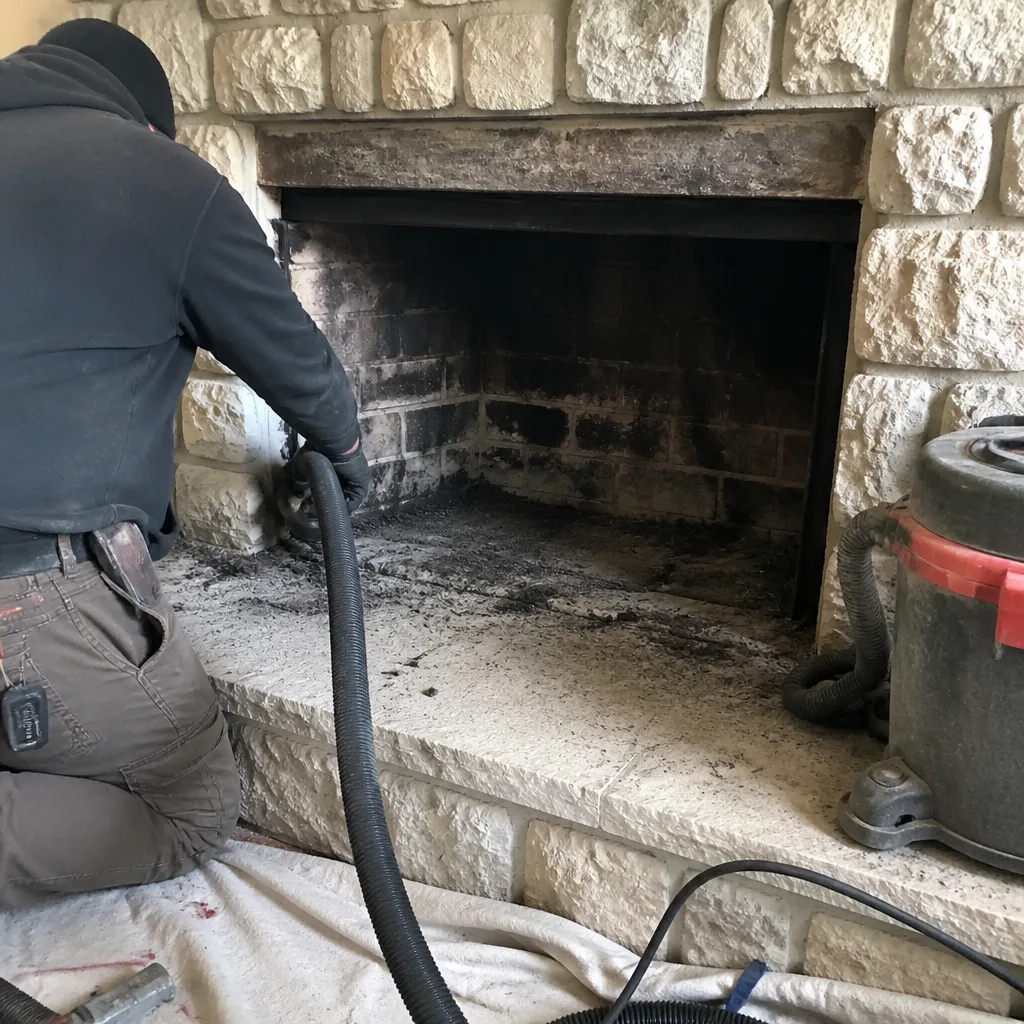 Before
 After
 Before
 After
When to Call a Professional
Call a professional before the next fire is lit if any of these apply: the house is new to you and you don’t have a recent inspection report, a wood stove has been added to a masonry fireplace without a documented liner, you’ve had a chimney fire (even a small one), draft behaves differently than it used to, you smell creosote in the room when the fireplace is cold, or the last sweep showed any glazing. Also call if you’re not sure how much wood was burned by a previous owner. You can’t unwind burning history from the firebox. You can only inspect the flue. Bellmont Chimney Sweep offers free estimates in Spokane Valley. Call (844) 734-4138. We answer 24/7. Fast dispatch from 7am to 7pm, Sunday through Friday.
Frequently Asked Questions
Yes, physically you can clean a lightly sooted chimney with the right poly brush, rods, and a HEPA vacuum. The caveat is diagnostic. A DIY sweep doesn’t tell you what stage of creosote is present in the upper flue, whether the liner has cracked, or whether the smoke chamber needs attention. If the chimney has a recent professional inspection on file and the appliance is gas-fired with light deposits, DIY is reasonable. If any of that is unknown, the honest answer is that a professional sweep plus inspection is the safer call before the burn season starts.
A professional sweep runs a camera through the flue, assesses creosote stage, checks liner integrity, and produces a written condition report with photographic documentation. That report is what makes repair recommendations verifiable. The professional also carries liability for the assessment, which a homeowner doesn’t. On top of that, professional sweeps use industrial HEPA vacuums that a shop vac can’t match for indoor air quality. Cleaning and inspection are separate skills, and professional sweeps train for both.
Once per year for a wood-burning system in regular winter use, and on the inspection’s recommendation for a gas insert or gas fireplace. Spokane Valley’s long burn season accumulates creosote faster than a mild climate, so the schedule should track actual wood burned rather than a fixed date. If a professional sweep reports stage 2 or stage 3 deposits at the annual visit, a mid-season sweep is warranted. Any new-to-you home should get an inspection before first use.
No. A shop vac filters coarse debris, not fine soot, and it lacks the airflow volume to hold negative pressure in the firebox while the brush works. Fine soot particles escape into the living room, settle on surfaces and in HVAC returns, and the smell lingers for weeks. Professional chimney sweep vacuums are industrial HEPA units sized to the firebox, and they’re a necessary part of the job, not a nice-to-have. If a homeowner doesn’t own a true HEPA vacuum, DIY sweeping will degrade indoor air quality.
Yes. Older Spokane Valley homes frequently arrive with an unknown liner history, and sometimes with a wood stove added to a masonry fireplace without a documented liner. You can’t tell from the firebox what the flue looks like above the smoke shelf, and previous owners’ burning habits leave signatures only a camera can reveal. An inspection is the honest first step before the first burn. It’s also the cheapest moment to catch a liner that needs relining or restoration work.
Ask to see the camera evidence and the written report before committing. Nothing should be recommended without photo documentation you can review yourself. Relining with DuraFlex liner systems and restoration work with HeatShield are both legitimate services when the report supports them, and Bellmont Chimney Sweep performs both with the same team that did the sweep. If the report shows the work can safely wait a season, that should be stated plainly. Ask for that answer in writing, and if the reasoning doesn’t add up, get a second assessment.
The Bottom Line
DIY chimney brushing works on light deposits, and there’s no reason to pretend otherwise. The real question for a Spokane Valley homeowner is whether you can accurately assess what you’re looking at once the brush comes down. Creosote stage, liner cracks, and a deteriorated smoke chamber don’t signal their presence. Cleaning and inspection are different skills, and the diagnostic half is where the risk lives in older homes with unknown liner history. If you have a recent inspection, a HEPA vacuum, and a lightly used gas fireplace, DIY is defensible. If any of those are missing, a professional sweep plus inspection is the cheaper decision once the risk is weighted in. Reach out through Spokane Valley to schedule a sweep with the same team that does inspection and repair.
Call (844) 734-4138 for a free estimate. We answer 24/7. Fast dispatch from 7am to 7pm, Sunday through Friday.
Written by the team at Bellmont Chimney Sweep.